


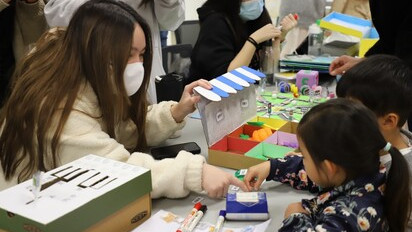
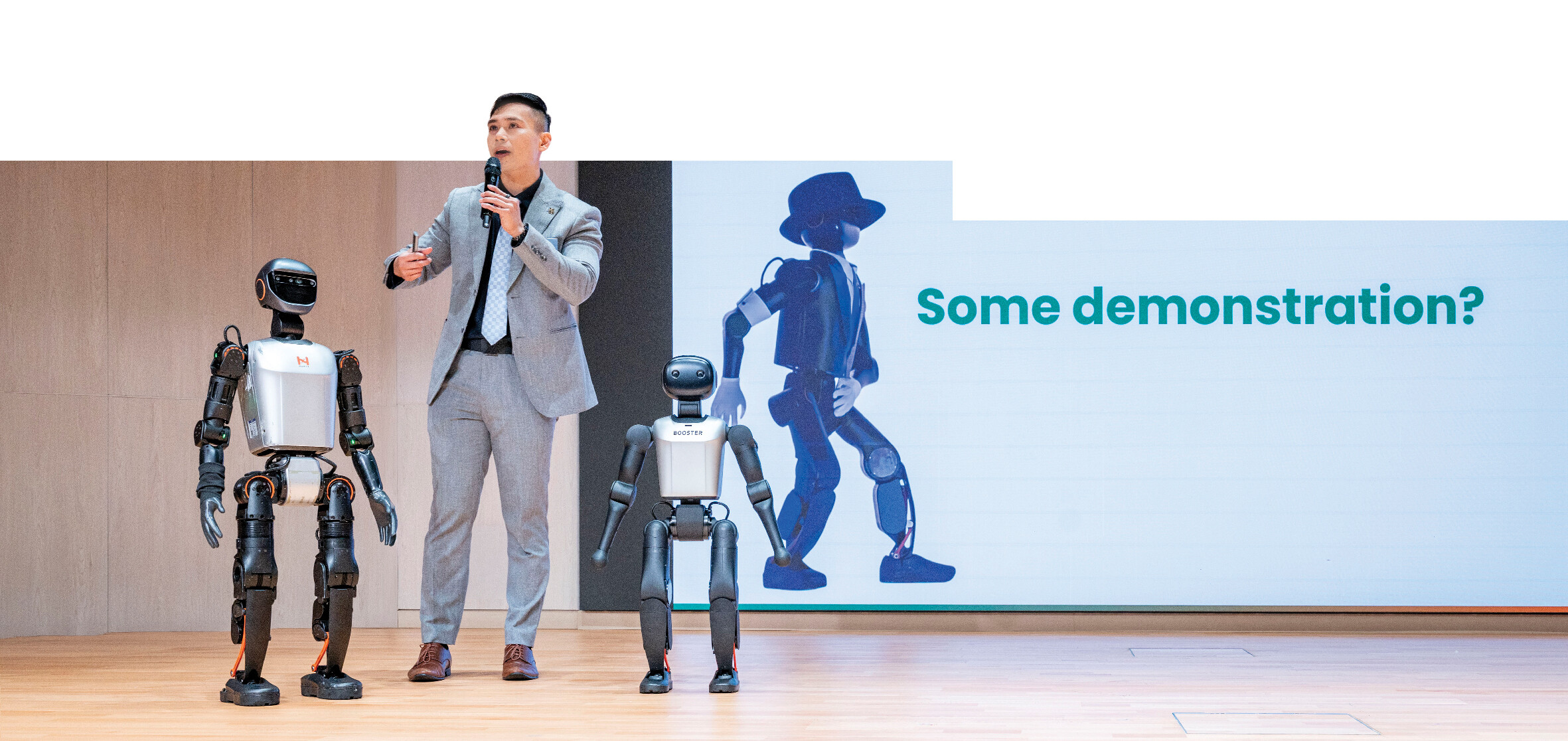
In a primary school classroom, students interact with a robot nearly as tall as they are. It can engage in fluent conversations, present key knowledge points according to the lesson content, correct students’ grammar, and even assume different roles during classroom activities. Named ‘Little Pony’, this robot is equipped with the zero-code EDU-Mix intelligent control platform developed by Dr Kevin Yung Wai-ho, Associate Professor in the Department of Curriculum and Instruction at EdUHK, and his research team, redefining the possibilities of learning and teaching.
As artificial intelligence and robotics technologies continue to advance rapidly, their applications are increasingly extending into the education sector. Dr Yung observed that most robots currently available on the market are designed primarily for entertainment or industrial purposes, with few tailored specifically for classroom teaching. At the same time, existing e-learning platforms largely rely on tablet devices, which offer limited interactivity and may not effectively motivate students to learn. “We constantly ask ourselves how we can make learning livelier and more engaging,” says Dr Yung.
Enhancing classroom interaction
To address this challenge, he and his team have developed the EDU-Mix intelligent control platform – a teaching system that combines a humanoid robotic control platform with artificial intelligence (AI).
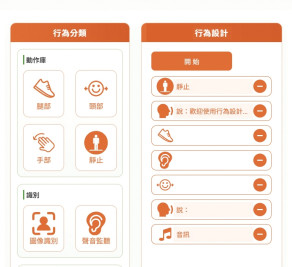
It features visual recognition, voice interaction, facial expression recognition, and supports programming learning, allowing teachers to pre-configure teaching content and learning scenarios according to their instructional needs. During lessons, Little Pony can perform a variety of tasks, such as reading aloud texts, explaining concepts, and asking students questions.
Dr Yung describes Little Pony as a teaching assistant that can help teachers manage certain instructional tasks while enhancing classroom interaction. The system also supports the creation of different roles for various learning activities, such as grammar exercises and conversational practice, enabling teachers to adapt it flexibly to different teaching objectives.
“Rather than developing a tool with a single purpose, we want to create a system that can support a wide range of classroom needs,” explains Dr Yung. Beyond classroom teaching, Little Pony can also be used in various school settings, including serving as an event emcee, welcoming visitors on parents’ days, and participating in stage performances, demonstrating its versatility and potential.
Easy to use with minimal technical barriers
Unlike many AI tools that require programming knowledge, the EDU-Mix platform features a more intuitive operating interface. Teachers do not need a technical background to input teaching materials and complete basic configurations.
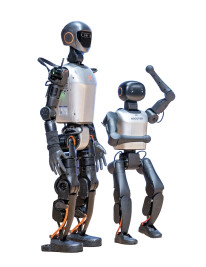
Last year, the team collaborated with a primary school in Shandong to conduct a semester-long pilot study, evaluating Little Pony’s effectiveness in learning and teaching contexts. The results revealed students’ overall interest in humanoid robots and their willingness to engage actively with them. Some students who were relatively shy were more comfortable talking to the robot and expressing their feelings. Students were also fascinated by the robot’s design and functions, such as its joint movements and visual system. “Students are noticeably more engaged when interacting with a humanoid robot because they feel as though they are communicating with a real person,” says Dr Yung.
Moving forward, the team will continue to collect feedback from both teachers and students to further refine the system’s functions. They also aim to strengthen collaboration among academia, industry and schools, expand partnerships with local schools, promote robotics education, and enhance learning and teaching effectiveness. “In the long run, we hope that every classroom will have a Little Pony to accompany students on their learning journey and support their growth,” says Dr Yung.
Other Research & Knowledge Exchange Articles