

A powerful transformation is sweeping through higher education, driven by AI, smart industrial integration, and regional coordination. At the forefront of this movement is EdUHK, which in 2026 has cultivated deep structural roots within the Greater Bay Area (GBA) and across the nation. Through cross-border initiatives, co-anchoring national forums, and shaping high-level regional discourse, the University is positioning itself as a primary architect of China’s future pedagogical landscape.
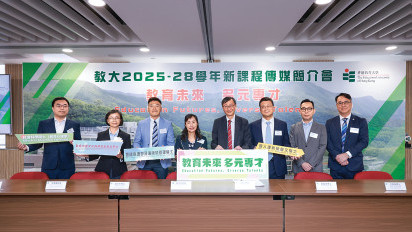
In May, EdUHK President Professor John Lee Chi-Kin led a high-profile delegation through Macao, Guangzhou and Shenzhen to strengthen frameworks for educational innovation. The tour emphasised applied talent cultivation and vocational education. In Macao, EdUHK’s Academy for Educational Development and Innovation (AEDI) signed strategic partnerships with leading tourism and hospitality enterprises, creating direct pathways for student training.
In Guangzhou, collaboration with Guangdong University of Technology (GDUT) explored joint entrepreneurship programmes within GDUT’s vast Innovation Valley. Shenzhen provided a platform to align EdUHK’s ‘Education + Technology’ roadmap with rapid advances in AI, smart elderly care, and the low-altitude economy. By engaging with Shenzhen Polytechnic University’s drone practice bases and AI curriculum, EdUHK is helping to establish unified vocational standards for future applied talents across the zone.
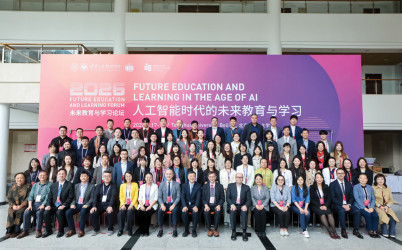
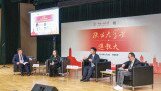
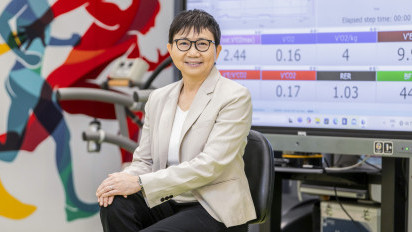
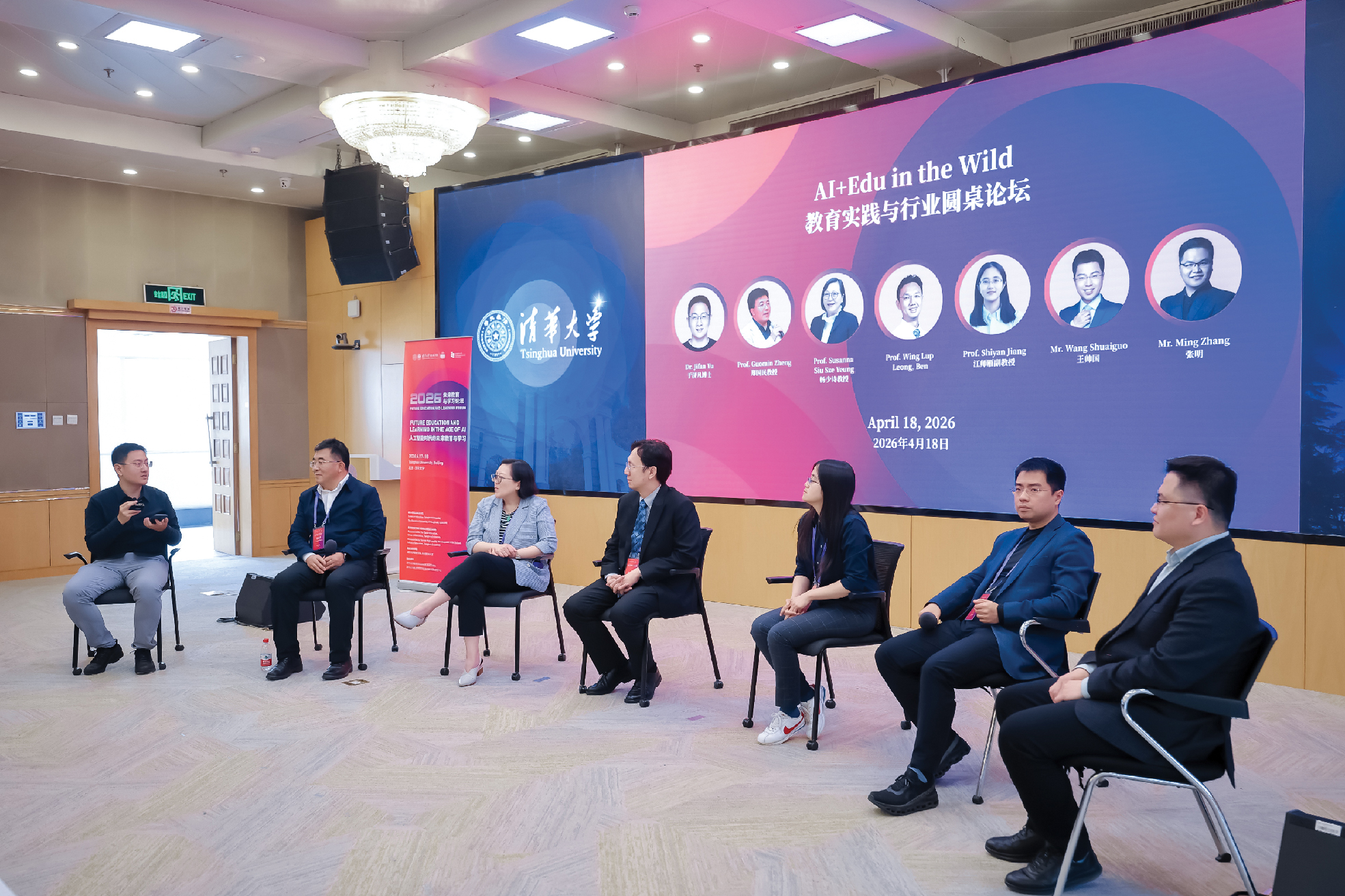
Beyond the GBA, EdUHK expanded its national reach by co-organising the prestigious 2026 Future Education and Learning Forum with Tsinghua University in Beijing. Drawing over 200 scholars on site and 74,000 online participants, the forum examined how intelligent systems are reshaping traditional education. EdUHK experts, including world-class researchers recognised on Stanford University’s top 2% scholars list, presented cutting-edge models such as AI-mediated digital language learning and neuroscience frameworks mapping digital motivation. A consensus emerged: language models must be integrated seamlessly into classrooms while prioritising human centric values.
This momentum culminated at the QS China Summit 2026 in Shenzhen, themed ‘Connected Cities, Collaborative Campuses’. EdUHK leaders joined over 500 higher education authorities to chart workforce transformation and regional student mobility. Represented on main panels, EdUHK academics shared insights on accelerating research and building institutional quality within China’s innovation corridors.
As the nation advances into its 15th Five-Year Plan, EdUHK’s collective efforts demonstrate its pivotal role in fuelling synchronised, high-quality development across the GBA and the wider country.
Other Global & National Connections Articles