


In its 2024-2035 Master Plan on Building China into a Leading Country in Education, the Central Government outlined its intent to enhance China’s global education strategy and establish a world-leading educational hub.
Meanwhile, with the Education Bureau and the University Grants Committee (UGC) of the Hong Kong SAR Government championing the ‘Study in Hong Kong’ initiative in support of this goal, the city’s universities are stepping up their bids for talents and partnerships worldwide. Guided by its vision of ‘Education Futures’ and dedicated to cultivating future educators and talents, EdUHK plays a vital role in driving the internationalisation of higher education.
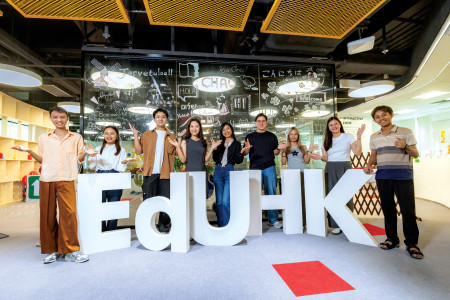
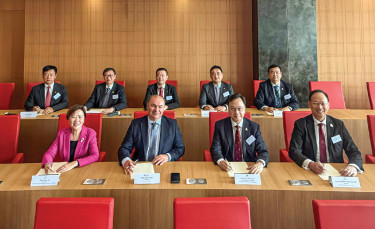
EdUHK joins a delegation of Hong Kong higher education at the inaugural France-Hong Kong University Presidents’ Forum and signs a Letter of Intent with France Universités
Traditionally viewed through the lens of teacher training – a discipline often tied to local curricula – EdUHK has spent recent years dismantling these boundaries by expanding its emerging interdisciplinary academic portfolio and widening its programme offerings to respond to societal and national needs, and deepening its global research footprint to provide a culturally diverse, lived experience for the next generation of educators.
“We live in an interconnected world that goes beyond the West and includes different countries and the Global South. The world could be viewed as a highly connected and inclusive whole. A diversified learning environment gives our students first-hand experience in an inter-cultural respect, mutual appreciation, and a genuine global perspective – all essential qualities for the educators and professionals of tomorrow,” says EdUHK President Professor John Lee Chi-Kin.
Pioneers along the Silk Road and beyond
As one of the earliest local institutions to forge ties with Belt and Road countries like Vietnam, Kazakhstan and Cambodia, the University has steadily scaled its global network and institutional reach by forging new partnerships and deepening existing ones across Africa, Europe, Central Asia, the Middle East and Southeast Asia.
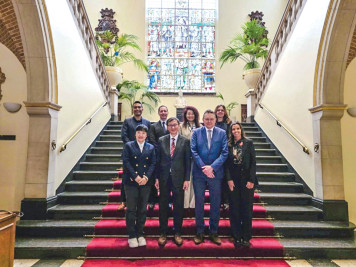
EdUHK signs an MoU with the University of Groningen in the Netherlands to foster student exchange and academic research collaboration
Since the establishment of the Global Research Institute for Finnish, European and Global South Education (GRIFE) in 2023, which has brought government funding and research projects on pressing topics such as a collaborative teaching framework, embodied AI in self-regulated learning, and case-sharing for students with special needs, EdUHK has continued to expand its network. New partnerships were recently secured in France, Germany, Hungary, the Netherlands and Sri Lanka, exploring joint programmes, academic exchanges and research collaboration. New foreign recruits, such as the new Film and Media Studies Chair Professor Mette Hjort for example, also brought in new learning opportunities for EdUHK students through her global connection, allowing them to work on theme-based creative projects with students and arts practitioners in Zanzibar.
A diversified learning environment gives our students first-hand experience in inter-cultural respect, mutual appreciation, and a genuine global vision – all essential for tomorrow's educator
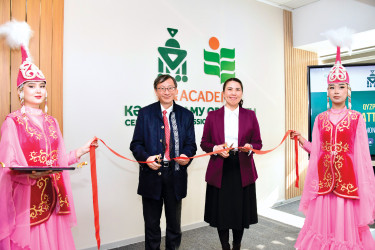
EdUHK and Kazakh universities launch the Academy of Education
Beyond this, EdUHK has also sought to share its best practices globally to promote equity in education. Earlier this year, Professor Lee was in the Middle East to address global leaders at the World Government Summit on how educators can prepare to thrive in the AI era, while strengthening ties with top universities in the UAE and Oman. In June, he shared insights with scholars and government leaders at the International Symposium on Education Development, and contributed to advancing educational collaboration along the Maritime Silk Road.
He also signed MoUs with five universities along the Maritime Silk Road and establishing a Joint Centre with Universiti Brunei Darussalam to advance curriculum and research innovation, education leadership development and evidence-based educational practices in the region.

A culturally vibrant, borderless campus
These exchanges have enhanced and deepened the University’s global presence and fostered further academic and research collaborations. Professor Lee believes EdUHK is “reaching a new milestone” in terms of internationalisation.
To further attract global talent, the University has diversified its curriculum in recent years to include psychology, linguistics, AI and data sciences, social sciences, environmental sciences, sports sciences and personal finance, while starting from the 2025/26 academic year, the University transformed all 13 existing five-year Bachelor of Education Programmes into co-terminal double-degree programmes to facilitate cross-disciplinary study and nurture well-rounded educators.
EdUHK is also actively recruiting faculty globally. Building on its strong academic team from 30 countries and regions – including 54 scholars ranked among the world’s top 2%* – it has further recruited 18 foreign faculty members in recent years, many of which being senior scholars from renowned universities.
Exchange programmes have likewise grown in breadth and depth, with around 360 students from 48 partner institutions worldwide joining the campus in the 2025/26 academic year – an 81% increase over the previous year and almost triple the figure in 2023/24, all aimed at delivering a rich and diverse academic and cultural experiential learning. The University has also hosted numerous conferences and events to foster cross-cultural dialogue, including a joint symposium with Harvard and Stanford professors on integrating cutting-edge technologies into education, training and talent development.
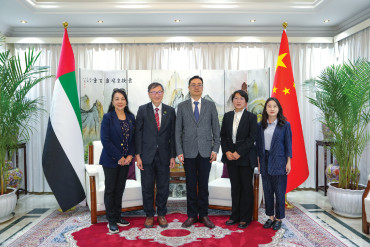
Cultivating human capital and virtues
Professor Lee believes all national and local policies that promote internationalisation boil down to a single critical variable: human capital. With talent and network, an academic institution can translate knowledge and discoveries into impact that benefit society and the nation.
“Whether attracting talent from afar or nurturing at home, we hope they’ll stay on to contribute,” says Professor Lee. “Therefore, it’s not just skills and knowledge that we teach, but positive values and virtues. These are the essence of education.”
Bringing in students and academics from diverse backgrounds can enhance this. “They contribute different approaches to learning, teaching and research. They help cultivate global citizens who understand and respect other cultures, and help foster partnerships with other universities – increasing the global impact of our activities.”
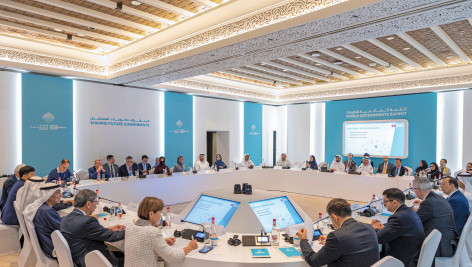
Professor John Lee Chi-Kin participates in the Global Universities Roundtable
In leading teacher education, EdUHK cultivates an adaptable mindset to navigate a dynamic global landscape. Serving as the UNESCO Chair in Regional Education Development, Professor Lee actively promotes lifelong learning, equal opportunities, and technological equity in assessment. In parallel, the University has set up the Global Centre for Women, Development and Education and established the Global Women’s Development and Education framework to promote women's studies and empowerment across the Global South. At home, EdUHK is also strengthening ties with cities in the Greater Bay Area through collaborations as well as the establishment of the EdUHK Shenzhen Research Institute and the EdUHK Shenzhen Educational Development Centre.
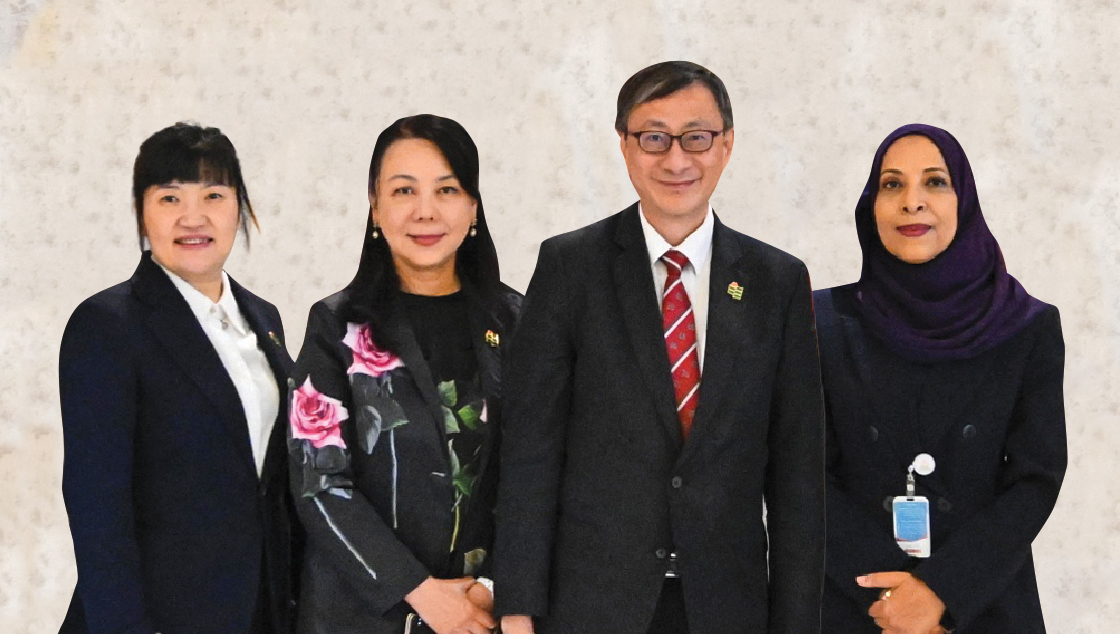
An EdUHK delegation visited the Ministry of Education of Oman in February 2026
These concerted endeavours are reflected in recent record-breaking rankings: EdUHK secured a historic seventh globally in Education in the QS World Subject Rankings 2026, improved greatly in Linguistics, Psychology, Sociology and was ranked for the first time in two broad subject areas: Arts & Humanities and Social Sciences & Management. The University also debuted at 195th in the THE World University Rankings, and placed second worldwide for SDG 4 (Quality Education).
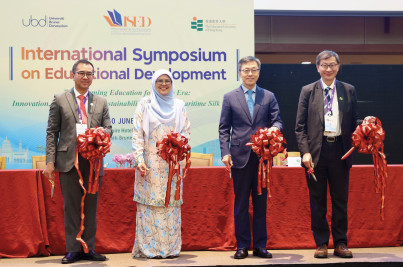
EdUHK and Universiti Brunei Darussalam jointly launch The Joint Centre for Curriculum, Pedagogy and Assessment in Education Development
The 10th anniversary of EdUHK’s retitling serves as both a reflection on past achievements and a launchpad for future projection. By embedding values into growth, fostering authentic partnerships, and cultivating borderless perspectives, the University is not simply participating in the global education movement: it is driving and shaping it. As Professor Lee reflects, the mission is to ensure that education remains both a service and a calling vocation, one that transcends borders while staying true to its soul. In doing so, EdUHK stands as a vivid testament to how higher education can architect a borderless ‘Education Futures’.
* The World’s Top 2% Most-cited Scientists in the 2025 ranking, published by Stanford University