


With growing evidence that pollutants can affect both health and learning outcomes, indoor air quality (IAQ) has become a pressing issue in schools worldwide. At EdUHK, a pioneering initiative is tackling this challenge head-on.
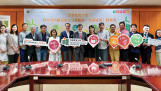
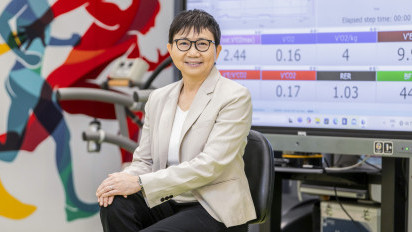
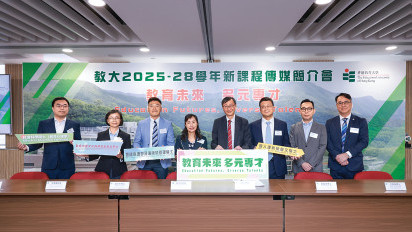
Funded by the Environment and Conservation Fund, the ‘Educating Secondary School to Manage School Indoor Air Quality’ project, led by Dr Deng Wenjing of EdUHK, was launched in March 2025.
The programme is designed to empower schools to take ownership of their indoor environments. Thirteen secondary schools across Hong Kong are now part of this ambitious project, which equips students and teachers with the knowledge and tools to monitor, analyse, and improve IAQ on their campuses.
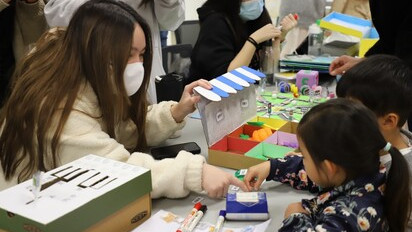
Between June and July last year, 194 students from five schools took part in three integrated STEM sessions. Activities included pollutant charades, real-time monitoring with sensors, and the assembly of DIY air purifiers. Students learned to identify pollutants such as carbon dioxide and fine particulate matter (PM₂.₅), assess hotspots within their campuses, and design strategies to improve air quality. “This hands-on approach has ensured that participants not only understand the science but also feel empowered to act,” explains Dr Deng.
The next steps include STEM sessions in the remaining schools during this academic year, a poster design competition in the coming summer, a campus exhibition and an international webinar in September.
The project builds on wider research led by Professor Ho Wing-kei, Head of the Department of Science and Environmental Studies, and Dr Deng. Their studies have highlighted the presence of harmful substances in school environments, including endocrine-disrupting chemicals (EDCs) and bacteria, which can affect children’s health through non-dietary exposure.
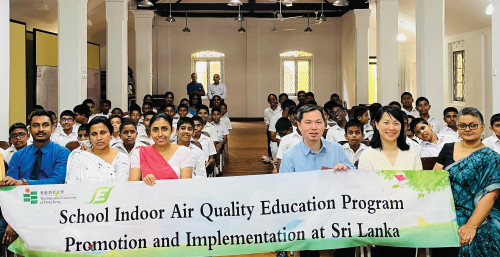
In late 2024, the team conducted workshops and STEM sessions in Guangxi (China), Sri Lanka, Indonesia, Malaysia and Nepal. Dr Deng emphasises the urgency of the matter, stating that air quality directly affects student development, and urges governments to recognise the health impacts of exposure to pollutants.
EdUHK’s research team is the first in Hong Kong to detect EDCs and bacteria in schools. As Dr Deng and Professor Ho continue their work, they are advancing scientific understanding while inspiring communities to take action.