

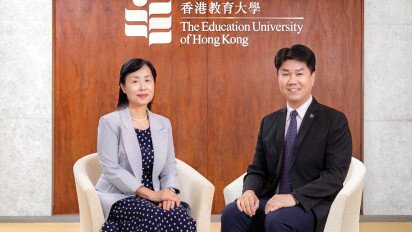
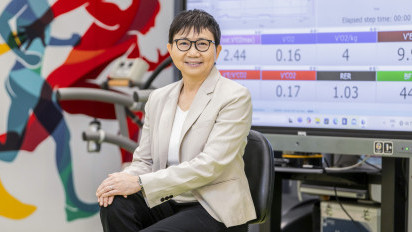


In an era where digital transformation is redefining every aspect of life, Professor Song Yanjie is leading a revolution in educational technology (EdTech).
As a professor in the Department of Mathematics and Information Technology, Professor Song’s work is not just about innovation. It is also about solving real learning and teaching challenges.
Improving emotional well-being
In line with the global trend for using technology to support students’ emotional well-being, Professor Song and her team recently unveiled an AI-powered app, EmoCare. This app is designed to support students’ emotional well-being, in recognition of the multitude of pressures students face outside of the classroom.
The app integrates large language models (LLM), artificial intelligence (AI), and uses the PERMA model for positive psychology (Positive emotion, Engagement, Relationships, Meaning, and Accomplishment) as a framework to develop the users’ positive emotions. Through diary writing, image generation, emotion tracking, and conversations with an AI companion, the Hong Kong patented app helps students regulate emotions, engage in self-reflection, and build resilience.
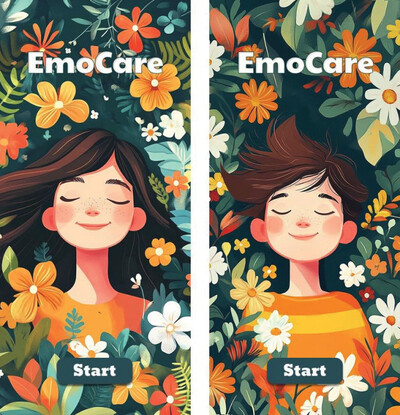
“EmoCare was born from our desire to understand students’ diverse needs,” Professor Song explains. Rather than merely alleviating academic stress, the app aims to provide a warm, supportive presence to help students manage stress and cultivate resilience.
Initial trials with 350 university students and 33 students with special educational needs have revealed that while most experienced positive emotions, 40% reported high stress or low moods. These findings underscored the urgent need for emotional support in academic settings. Professor Song’s team is now enhancing EmoCare with machine learning and LLM to improve emotional recognition and is building a visual big data platform to help educators monitor students’ emotional well-being status in real time.
.jpg)
AR and VR for vocabulary learning
Professor Song’s vision extends beyond emotional support. Her team is pioneering immersive education through various award-winning innovations such as VocabGo, an Augmented Reality (AR) and Virtual Reality (VR)-supported vocabulary learning app that turns language acquisition into an engaging adventure.
Another breakthrough is Embodyverse, an AI-powered adaptive learning platform inspired by the Doraemon cartoons. Combining AR, mixed reality (MR), extended reality (XR), and generative AI, it creates an immersive, collaborative learning environment enhanced by a responsive 3D-printed robot. Grounded in the socially shared regulation of learning model, Embodyverse provides adaptive real-time feedback, visualised learning processes, and scenario simulations. “This allows students to better understand their own participation, learn how to work with others and the AI-driven robot to complete tasks, and thereby cultivate critical thinking and teamwork skills.”
MetaAI: A start-up to drive technology innovations
Beyond the classroom, Professor Song is also shaping the future of EdTech through MetaAI, a start-up dedicated to generative AI innovations. The team has developed iChat, a customised digital human chat system, for communication, learning, teaching and training in 3D virtual environments, allowing users to create personalised digital avatars capable of real-time dialogue in multiple languages.
Supported by EdUHK’s Centre for Entrepreneurship and Research (CEAR), MetaAI is gaining traction in the EdTech sector, with plans to expand by 2026. “CEAR offers valuable resources for incubation, including funding, facilities, training and mentorship,” Professor Song notes. The EmoCare app has already been selected for the prestigious EdUHK-HKSTP Co-Ideation Programme, boosting MetaAI’s influence and accelerating its market launch.
Unprecedented change
Professor Song and her team aim to redefine how we learn together in a connected world. “I firmly believe that educational technology will bring unprecedented changes to learning and teaching in the AI era. We’re here to make that future a reality”, she concludes.
Other Research & Knowledge Exchange Articles