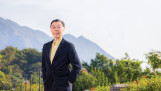


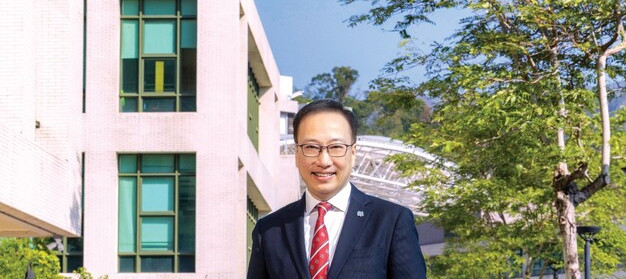
EdUHK has made an impressive leap in the QS World University Rankings: Sustainability 2026, climbing over 600 places to reach 571st. This positions the University among the top 30% of institutions worldwide and 146th in Asia. Vice President (Research and Development), Professor Chetwyn Chan Che-hin believes this is just the beginning, with ambitious plans to drive even greater impact.
This rise reflects EdUHK’s commitment to sustainability – a strategic priority underscored in its Strategic Plan 2025–2031. As Chair of the Sustainable Development Goals (SDG) Working Group at EdUHK, Professor Chan is well-placed to lead this mission, drawing on his diverse expertise in psychology, occupational therapy, and education leadership. “Academic research should extend beyond theoretical discussion and respond to real social demands,” he explains, adding that rankings provide a reference to guide behavioural change within the university community.
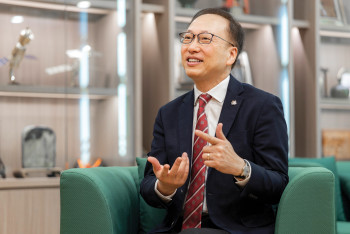
Professor Chan’s vision is firmly rooted in aligning EdUHK’s mission and across multiple United Nations SDGs, connecting institutional priorities to everyday practice. As an academic institution, SDG 4 (Quality Education) is of particular importance, and in which EdUHK has long been recognised as a leader.
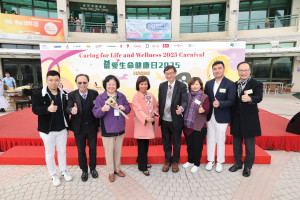
“At the individual level, we are constituents of society, and should integrate quality education into everyday life,” Professor Chan suggests. Professors, he adds, have a unique responsibility to propose and test new ideas, so as EdUHK on an institutional level. The University has launched numerous programmes to reform education and foster community engagement. These include revising primary school science curricula to emphasise sustainability, developing STEM modules, and enhancing teacher training. The University also promotes well-being through activities such as the ‘Caring for Life Carnival’ and light volleyball, supports students with special educational needs through ‘Project Aspire’, and encourages intergenerational exchange via the ‘One-Day Student Experiential Programme 2025 for Elders’.
On a regional level, EdUHK collaborates with partner institutions across Belt and Road countries including Brunei, Kazakhstan and the United Arab Emirates, providing training for pre-service teachers and offering advice on adopting AI and tech in education.
Back at EdUHK’s Tai Po campus, with over 2,000 students living in the hall, Professor Chan also sees opportunities to advance sustainability. “If facilities and resources are provided, the university community can push aggressively towards becoming carbon neutral,” he says. Current initiatives include reducing and recycling household waste, embedding SDGs into courses, and encouraging staff and students to take an international sustainability test. “Last year, a few hundred people completed the test. We will continue to expand this and gradually roll it out to other students and staff.”
.jpg)
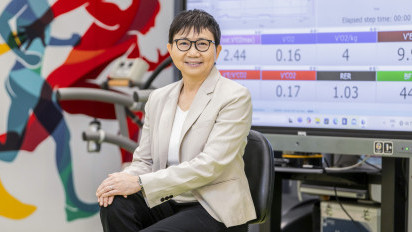
EdUHK is also funding projects that benefit society while promoting sustainable behaviour. The ‘EdUHK SDG Living Laboratory @ Tai Po’ focuses on healthy ageing, screening older adults for cognitive decline, providing lifestyle advice, and monitoring nutrition electronically. “Our aim is to hand over activities to local organisations, ensuring long-term sustainability and enabling replication in other districts,” Professor Chan explains. Another Living Laboratory project tackles food waste on Lantau Island, developing methods to convert waste into reusable resources before transferring technical know-how to NGOs.
Further initiatives promote lifelong learning, offering short courses and micro-credentials to help adults upskill in response to emerging technologies. “We’re currently working with Cyberport to establish onsite classes, and discovering further possibilities with the Hong Kong Jockey Club,” Professor Chan notes.
As Convenor of the Hong Kong Sustainable Campus Consortium in 2025 and a member of the International Sustainable Campus Network, EdUHK will share in June its vision at the 2026 THE Global SDG Congress in Jakarta. “We will hold a session at the Congress, where more than 5,000 sustainability leaders will attend,” Professor Chan says.
Looking ahead, he envisions expanding EdUHK’s two living laboratories and strengthening partnerships with global organisations including UNESCO, focusing on Decent Work and Lifelong Learning. “These initiatives educate us in where improvements can be made,” he reflects. “The more we engage, the more we learn, and that knowledge moves us closer to achieving the SDGs.”
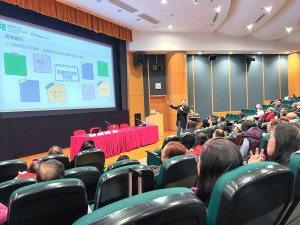
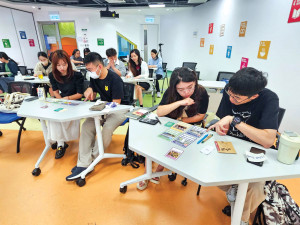
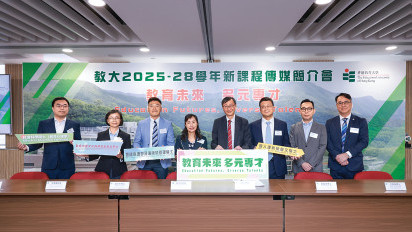
EdUHK actively promotes well-being among the elderly and encourages students to participate in SDGs challenge in support of the SDGs
Other Interview Articles